Our commitment to biodiversity preservation and environmental respect is part of our Philosophy. We are dedicated to helping the wildlife that thrives around and in our vineyards. In this endeavor, we are supported by the Hunting Federation to plant over 760 meters of rural hedgerows in our vineyards.
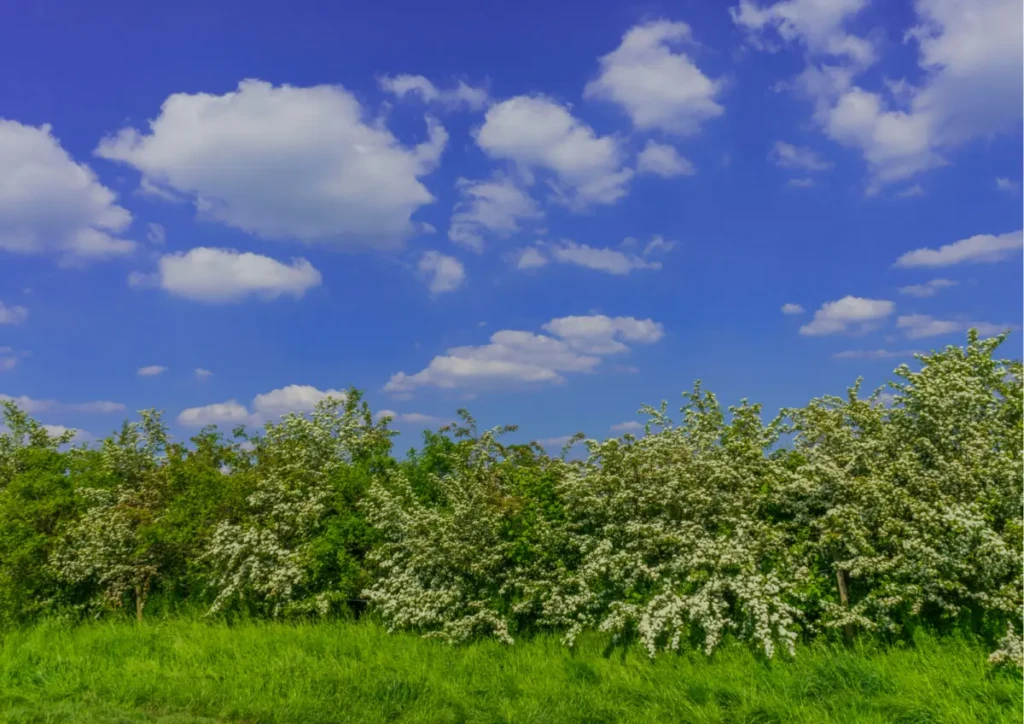
Hedgerows are true ecosystems
The microclimate they create, thanks to the shade they provide and the moisture they retain, offers an ideal habitat for hundreds of animal species. Birds, mammals, reptiles, amphibians, insects, and spiders coexist beneath the plant cover.
Hedgerows are genuine assets for local biodiversity. Nesting sites for birds, refuges for bats, ecological corridors… each animal species can benefit from the shade and humidity they generate.
Hedgerows and viticulture
While hedgerows were mistreated for many years by winemakers who viewed them unfavorably, this is no longer the case today. The presence of hedgerows along vineyard edges has become obvious, both for the benefits they bring to biodiversity and for the services they provide to winemakers.
By harboring beneficial species, hedgerows help control the proliferation of vine pests. They also act as windbreaks and limit surface water runoff and soil erosion.
Hedgerows at Domaine Deux Roches
Won over by their ecological appeal and the assistance they will provide us, we are preparing to plant 764 meters of hedgerows on our plots in the Mâconnais region.
A hedgerow is composed of several rural tree species. We have chosen local species because they are well adapted to our climate and the diseases prevalent in our region. It will also be easier for local wildlife to adopt this new ecosystem.
The species
Common Hazel – Corylus avellana
A symbol of wisdom, the hazel is a tree that can be grown as a shrub. Its fruit, the hazelnut, is greatly enjoyed by small rodents, such as squirrels. In the warmer season, bees forage on its nectar-rich flowers.
Blackthorn – Prunus spinosa
This thorny shrub blooms as early as March, even before its leaves appear. Its small white flowers offer a royal feast to pollinating insects, and its fruits are edible. Blackthorn provides excellent plant cover for local wildlife.
Common Privet – Ligustrum vulgare
Privet foliage persists through winter. Its fragrant flowers are highly prized by pollinating insects, but its berries are toxic to humans. This shrub is perfectly suited for creating rural hedgerows.
Dog Rose – Rosa canina
This wild rose, also called the dog rose, is widely found throughout France. It shelters numerous insects, and birds love its edible fruits, which are rich in vitamin C. Dog rose integrates well into rural hedgerows alongside blackthorn, which is also thorny.
Common Dogwood – Cornus sanguinea
Common dogwood gets its name from its brilliant blood-red bark. Its white flowers form small pompoms within its dense foliage. Its fruits are toxic to humans but highly appreciated by birds.
European Elder – Sambucus nigra
European elder has numerous medicinal properties: antiviral, antioxidant, anti-inflammatory, etc. In addition to benefiting our health, this shrub is an ally to wildlife. It shelters many insect species, such as the elder sphinx moth, as well as birds and rodents that love its berries.
Snowy Mespilus – Amelanchier ovalis
This shrub produces a large quantity of edible fruits that birds greatly enjoy, and its white flowers attract many insects. Snowy mespilus is often used to fill out rural hedgerows.
European Spindle – Euonymus europaeus
The European spindle is easily recognized by its small pink capsule-shaped fruits. In autumn, the shrub dons flamboyant hues, making it a highly prized ornamental plant. It is also very beneficial to biodiversity.